
CIIL - NEWSLETTER , January 2026 - N° 18
Plateaux techniques de l'unité
Biofab & Mechanobiology (BFM)

3D Printing and Microfabrication
The facility is equipped with stereolithography (SLA) and digital light processing (DLP) 3D printers, enabling the rapid and precise manufacture of devices, moulds and components for applications in microfabrication and biomedical engineering.
Equipment: Formlabs 2, Formlabs 3, Formlabs 4, Formlabs 4B (biocompatible).
A laser cutting and engraving system enables the manufacture and customisation of parts made from polymers, wood or acrylic, as well as the engraving of certain metals and glass.
Equipment: Beambox Pro 50W laser cutter (FLUX).
A simple thermoforming system is also available, enabling the rapid production of plastic moulds.
Equipment: FormBox (Mayku).
Post-processing
Dedicated stations for washing and UV curing ensure the controlled post-processing of 3D-printed parts, guaranteeing their mechanical and dimensional quality, as well as their compatibility with biological applications.
Equipment: Form Wash (Gen 1 & 2), Form Cure (Gen 1 & 2), dedicated workstations.
Conception numérique et simulation
La plateforme met à disposition des outils de conception assistée par ordinateur pour la modélisation 3D de dispositifs, ainsi que des outils de simulation multiphysique pour l’analyse des comportements mécaniques, fluidiques et physiques (déploiement en cours).
Équipements : Fusion 360 (Autodesk), COMSOL Multiphysics (prévue pour 2026).
Chemistry and Surface Preparation
A fully equipped fume cupboard facilitates surface preparation, silanisation and the physico-chemical treatments required for the fabrication and functionalisation of microfabricated devices.
Equipment: vacuum chamber, hot plates, associated equipment.
PDMS and Microfluidics Station
A dedicated PDMS station enables the prototyping and fabrication of microfluidic chips, including moulding, assembly and the fabrication of thin membranes with controlled mechanical properties.
Equipment: PDMS workbench, spin coater (Laurell), associated equipment.
Microfluidic flow controllers
Microfluidic flow controllers enable precise control of flow rates and dynamic conditions in microfluidic devices, particularly for organ-on-a-chip applications.
Equipment: FlowEZ (Fluigent).
Micropatterning and surface structuring
An optical micropatterning system enables the spatial structuring of surfaces, the polymerisation of hydrogels and the creation of bespoke in vitro cellular microenvironments.
Equipment: PRIMO (Alvéole).
A UV-ozone device is used for surface cleaning and activation prior to assembly or functionalisation.
Equipment: UV-Ozone Cleaner Model 24 (Jelight).
Mechanical and nanometric characterisation
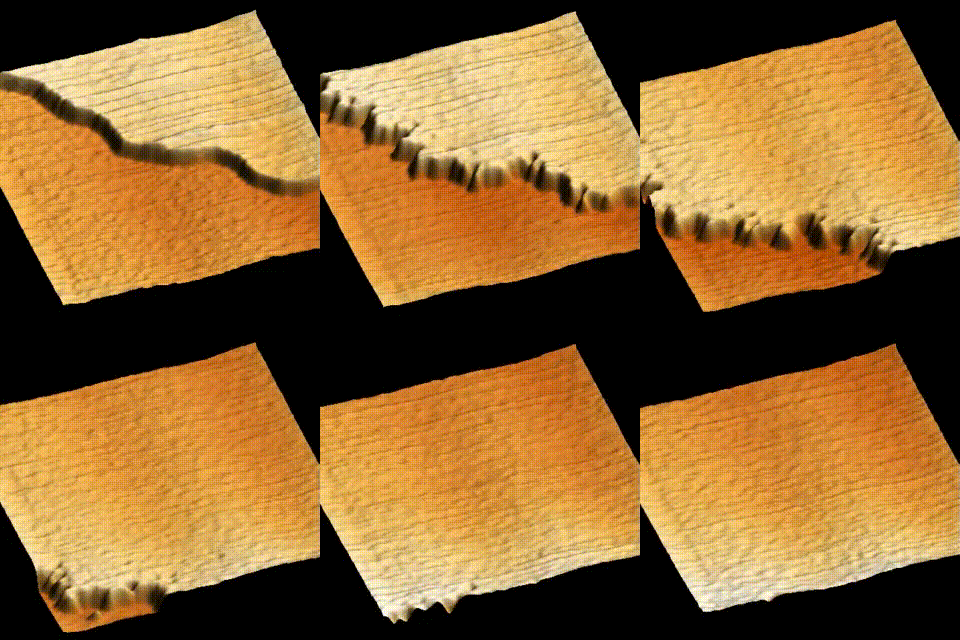
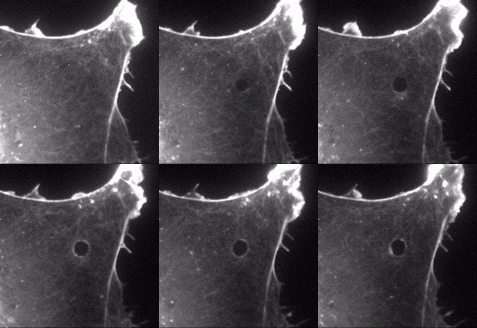
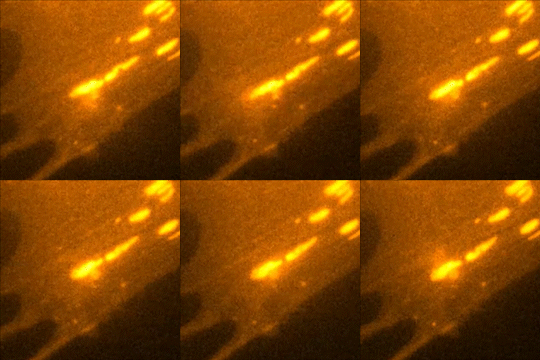
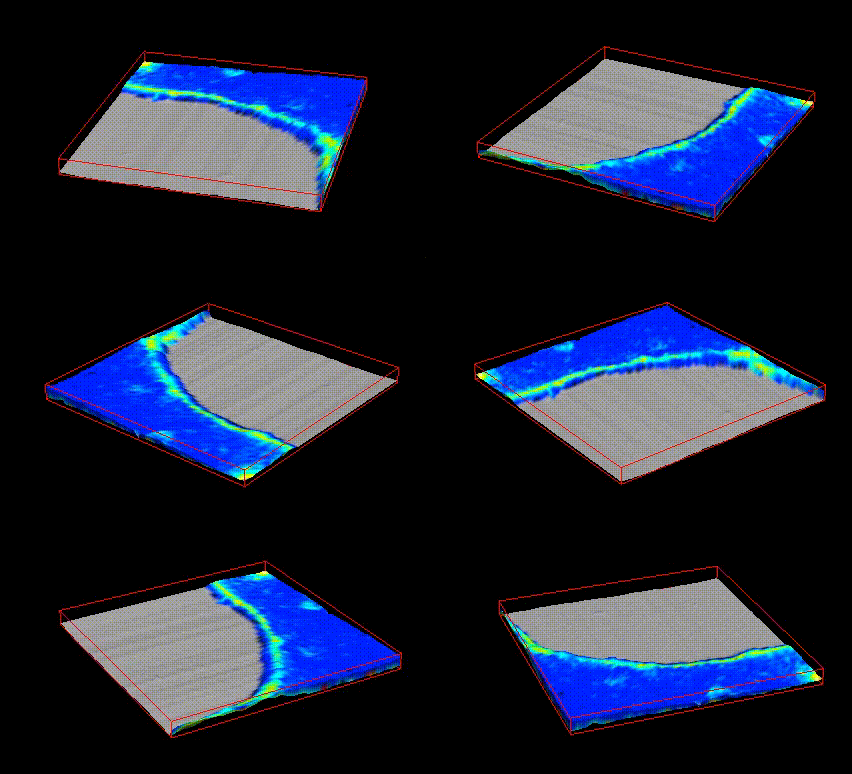
Several atomic force microscopes (AFM), some coupled with photonic microscopy, enable high-resolution study of the topographical, mechanical and adhesion properties of materials and biological systems: biomolecules, cells and tissues. The facility also has the expertise and resources for data analysis.
Equipment:
Bruker-JPK NanoWizard V coupled with an Abberior Instruments STED super-resolution microscope
Bruker-JPK NanoWizard III Ultra coupled with a BioMat wide-field inverted microscope and FluidFM technology
Bruker BioScope Resolve coupled with a Zeiss Elyra P1 super-resolution microscope
Bruker FastScan Bio
Bruker Multimode 8
Training
Training courses can be arranged for each technology, depending on users’ needs and projects.
Access
For most 3D and microfabrication equipment, initial training is required to gain access to the facility. Researchers can then book and use the equipment independently. Dedicated technical support is provided for super-resolution and AFM techniques.
Staff
Scientific Director: Alexandre Grassart
Members: Sébastien Janel (IR CNRS), Elizabeth Werkmeister (IR CNRS)
Plateau de Biostatistique
The CIIL’s biostatistics unit supports the Centre’s research teams throughout all stages involved in the generation, analysis and interpretation of experimental and clinical data.
It is involved at the early stages of projects, helping to define the experimental design and carry out power calculations. In this way, it ensures the production of high-quality data that is optimally suited to answering the research question. This initial stage may be required for project submissions, including those involving animal experimentation.
It defines and implements the analysis plan by selecting the statistical methods best suited to the data and the research question. By applying quality control to the data and ensuring methodological soundness, the unit ensures the production of robust results.
It works closely with the project leader to analyse and interpret the data and results as thoroughly as possible. Its work enables hypotheses to be tested or new ones to be generated during data exploration.
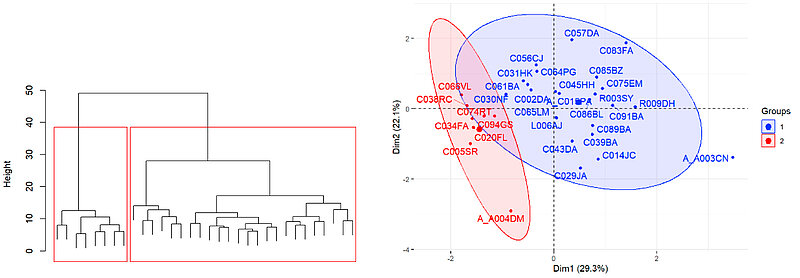
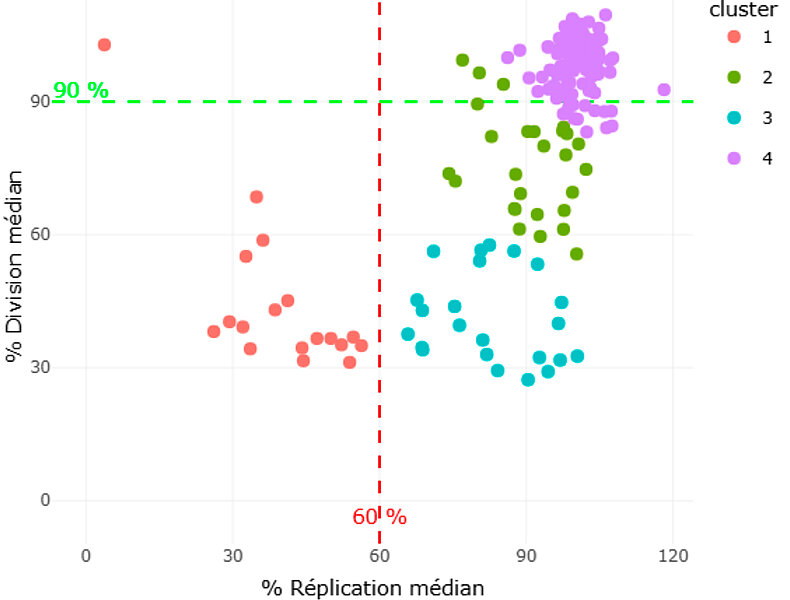
The platform offers a wide range of statistical expertise, from the analysis of small samples to the integration of data from different sources. This requires the use of both non-parametric statistical methods and advanced multivariate methods.
Since 2020, this unit has contributed to eight original publications by the CIIL.
The unit’s close collaboration with the research teams promotes awareness, training and the harmonisation of statistical practices, which contributes to rigorous, high-quality scientific output within the Centre.
Contact : Cécile Lecoeur (cecile.lecoeur@cnrs.fr)