MAJOR STRUCTURING PROJECTS
Programmes of research excellence and structuring
CIIL members coordinate and/or participate in internationally renowned research programs and structural initiatives (local, national, and international). Here are a few examples:
International


ERC-Synergy SYNERGY-PLAGUE (2024)- Florent Sebbane (Plague and Yersinia pestis team)
“The project: "Reconstructing the environmental, biological, and societal drivers of plague outbreaks in Eurasia between 1300 and 1900 CE" (Synergy-Plague) (…) is a highly multi-disciplinary project to bring our understanding of plague – past and present – to new heights.”


Program NOSEVAC (Horizon Europe 2023) – Nathalie Mielcarek (RMB team) , Jean-Claude Sirard (BAI Team)
“The international partnership to advance the development of new vaccines against upper respiratory tract pathogens (NOSEVAC project) aims at developing and evaluating innovative nasal vaccine platforms as a novel approach to prevent the earliest stage of infection, thereby inhibiting upper respiratory tract (URT) colonisation, transmission and disease.Under the European Vaccine Initiative (EVI) coordination, the NOSEVAC project builds on a unique consortium of 13 complementary teams from the EU, UK and Switzerland.”

Chaire WILL University of Lille France 2030 – PROTECT Laurye van Maele (BAI team) – Stanislas Goriely (Univ Libre de Bruxelles)
“The Welcoming Internationals to Lille (WILL) project aims to strengthen the scientific influence of the University of Lille while improving the quality of the welcome given to international visitors.”

ERC-COG ANTIBIOCLICKS (2020) – Ruben Hartkoorn (antibac team)
“To enhance drug uptake by bacteria, the EU-funded ANTIBIOCLICKS project is working on a Trojan horse-like approach whereby the antibiotic gets conjugated to iron-chelating microbial siderophores used to transport iron across cell membranes. Scientists will employ a simple yet powerful click chemistry strategy to couple siderophores to antibiotics or other molecules and evaluate their antibiotic and diagnostic potential. The new bioinspired conjugation chemistry will serve as the stepping stone for the future development of novel bacterial therapeutics and diagnostics.”
Program FAIR (Horizon 2020) – Jean-Claude-Sirard (Bacteria,Antibiotics & immunity team)
“ The project aims to evaluate an adjunct to antibiotic therapy as an emerging concept for overcoming antimicrobial resistance in cases of pneumonia. The research focuses on immunomodulatory flagellin, a unique protein that enhances the innate immune defences of airway epithelial cells, and on the development of a specific airway aerosol delivery system using nebulisation. FAIR's main objectives include optimising nebulisation and demonstrating flagellin-associated enhancement of the response to antibiotics, as well as obtaining pharmacokinetic and pharmacodynamic models for clinical validation and safety assessment of flagellin nebulisation in a Phase I clinical trial.”
CNRS International Research Network (2025) - François Trottein (VICI team)
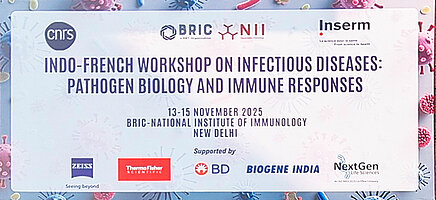
Infectious diseases represent a heavy burden on society. They are responsible for several million deaths worldwide each year. Alarmingly, their frequency and intensity have increased significantly over the last two decades, a situation that is set to worsen in the future (environmental, economic and societal changes). In order to improve prevention, diagnosis and treatment, (...) an International Research Network (IRN) between India (the Delhi region) and France in the fields of infection and immunology [is being created]. Particular emphasis will be placed on (re)emerging and endemic viruses and parasites. (...) The 28 partners identified (...) (15 Indian and 13 French) wish to pool their complementary expertise in order to better understand the mechanisms of host-pathogen interactions. (...) Over the course of five years, several working meetings, symposiums and exchanges between young scientists will be organised.
Program ERA4TB (Horizon 2020) – Alain Baulard (RMB team)-Priscille Brodin-Ruben Hartkoorn (antibac team)
“the European Regimen Accelerator for Tuberculosis (ERA4TB) project is a public-private initiative devoted to accelerate the development of new treatment regimens for tuberculosis. ’[It aims at creating] a European open platform to accelerate the development of new regimens for the treatment of tuberculosis.”
National

CNRS RT Immunage (2026) - François Trottein (VICI team)
“Ageing is the main risk factor for many chronic diseases, which significantly impair quality of life. The progressive deterioration of immunity reduces the body's ability to fight infectious agents and tumour cells and hinders repair mechanisms after trauma. Understanding the mechanisms underlying age-related immune dysfunction is therefore essential for identifying new therapeutic targets and promoting healthy ageing. This complex field of research requires a multidisciplinary approach to understand the multifactorial causes contributing to the decline in immune function and its impact on age-related diseases. In the context of a global ageing population, the medical and socio-economic stakes are considerable, as are the scientific challenges. (...) Our ambition is to establish a national fundamental research network dedicated to studying the biological processes underlying the ageing of the immune system. The IMMUNAGE network brings together 21 teams (...) Two major areas of research have been defined: (i) the molecular and cellular bases of immune ageing and (ii) the development of interventional strategies targeting the immune system to promote healthy ageing."



CNRS VIROCRIB Consortium de criblage antiviraux (2021) – Jean Dubuisson (MCV team)
“To be better prepared to deal with future emerging or re-emerging viruses, the CNRS Institute of Biological Sciences has created a shared infrastructure for screening antiviral molecules. This infrastructure, called Virocrib, brings together a consortium of virologists and biologists, research teams and technological platforms for screening molecules in several relevant and complementary preclinical models (in vitro, ex vivo, in vivo) with a view to responding rapidly to the emergence of future pathogenic viruses that could lead to global health crises. The expertise and complementary nature of its teams and platforms aim to accelerate the screening and preclinical evaluation of antiviral drugs to better cope with the epidemics and pandemics of tomorrow.”

Pasteur International Units
“The Pasteur Network is a vast human and scientific community with more than 30 members in over 20 countries contributing together to the improvement of global health.”
- 2020- IPLille, IPParis, IPMadagascar – Florent Sebbane (PYP team)
- 2023- IPLille, IPParis, IPMontevideo – Mathieu Gissot (APIB team)

PEPR ANRS-MIE CAZIKANO (2023)- Yves Rouillé (MCV team)
“The CAZIKANO project focuses on the Zika virus, which causes serious congenital malformations. It aims to identify the factors that promote transmission of the pathogen by mosquitoes and viral persistence in individuals. The objective is to propose innovative anti-infectious strategies based on the antiviral action of compounds extracted from plants native to France's overseas territories.”


PIA Program MUSTART (2021) Alain Baulard (RMB team), Priscille Brodin, Ruben Hartkoorn (antibac team)
“The Mustart consortium is at the forefront of tuberculosis (TB) research in France, dedicated to developing new antibiotic therapies targeting Mycobacterium tuberculosis (Mtb) in its various physiological and metabolic states. It addresses the challenges posed by antibiotic tolerance and resistance, which are responsible for long treatments, side effects, poor adherence and the emergence of multi-resistant strains. The main objective is to discover experimental molecules for the development of "pharmaco-complementary" therapies capable of effectively targeting the different states of Mtb. The consortium has expertise covering the entire chain of innovative antibiotic development, through to their clinical application.”
Regional
ECRIN project
The ECRIN project builds on the achievements of the CLIMIBIO and IRenE environmental projects (CPER 2015–2020), enabling the formation of a unique consortium of laboratories at the national and European levels to address the challenges posed by these changes. It does so by promoting multidisciplinary environmental research that combines cutting-edge research with strategies for transferring innovations to businesses.
This new consortium will cover disciplinary fields ranging from physical chemistry to health, and from biodiversity to urban planning, thanks to its collective expertise and the tools available in the laboratories, in order to:
1- better characterize the physicochemistry of urban environments (effects of transportation, industry, and buildings) as well as peri-urban and rural environments (effects of distant and nearby sources, both natural and agricultural),
2- assess their impact on human health (through epidemiological as well as experimental approaches) and on ecosystem services (e.g., water quality, pollination services…),
3- to propose mitigation and adaptation measures appropriate to each of these societal contexts (changes in behavior, modes of transportation, etc.),
4- to strengthen the transfer of innovation to the private sector.
At the CIIL, there are two researchers affiliated with the CPER Ecrin: Patricia de Nadai and Muriel Pichavant.
We regularly participate in academic conferences.
We regularly receive funding from this CPER (for equipment and human resources).
Resist-omics CPER

The Resist-omics CPER is a programme funded under the 2021–2027 State-Region Contract Plan (CPER). Its aim is to organise research on inflammatory and infectious diseases, with a particular focus on resistance mechanisms and complications. These two groups of diseases are closely intertconnected due to their steadily rising incidence rates: they can affect each other's treatment efficacy and lead to complications that compromise the patient’s functional and vital prognosis. An example of this is the rapid inflammatory response triggered by the SARS-CoV-2 virus, which can lead to organ failure in the short and long term. This highlights the importance of combining anti-infective and immunomodulatory approaches in its management. The Resist-omics program comprises several key initiatives: - acquisition of state-of-the-art equipment - supporting scientific projects focused on inflammation and infection - attracting high-potential researchers - supporting the dissemination and communication of the program’s results, both in France and internationally Ultimately, the goal of the Resist-omics CPER is to make the Hauts-de-France region an international leader in research and innovation in the field of infectious and inflammatory diseases, providing new diagnostic, preventive, and therapeutic solutions. Clinically, this will result in optimized pathways for the prevention and management of patients with inflammatory and/or infectious diseases.
FHU Respire (CHU Amiens, Caen, Lille, Rouen) Philippe Gosset (TIILD team), Sabrina Marion (APIB team), Karin Seron (MCV Team)
“Infectious and inflammatory respiratory diseases are particularly prevalent in the Hauts-de-France and Normandy regions. The onset of these often chronic conditions and their progression depend on interactions between the host and their environment (microbiological, toxic, chemical). This environment is undergoing rapid change due to human impact, with pollution, particularly atmospheric pollution, the emergence or re-emergence of respiratory pathogens and the increase in immunocompromised populations. In this context, it seemed appropriate to develop a comprehensive approach to this issue with the aim of improving the respiratory health of the population. The aim is to develop a cross-disciplinary approach, based on clinical and biological patient data (via cohorts), to generate hypotheses that will be evaluated at different levels in research laboratories (e.g. using cellular or murine models). Depending on the results, clinical trials (e.g. with new drugs) may be offered to patients.”
Cross Disciplinary Program France 2030 University of Lille (2024-2028) - Alexandre Grassart (MoHMI team), Fernando Real-François Trottein (CIVI team), Sandrine Belouzard (MCV team)
“ The MOSAIC project responds to the urgent need to develop a biomimetic instrumented platform that better models human physiology in vitro to promote translational research in infectious and chronic diseases. MOSAIC opens up new avenues for modelling and understanding infections, including emerging pathogens, and chronic diseases.”