CIIL - NEWSLETTER , november 2026 - N° 20
Scientific Profile
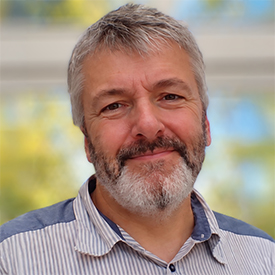
When I joined the IBL in 1998, the building was not yet quite finished. I had just completed a doctorate in microbiology at the Université Paris 6, with a thesis carried out at the Necker Hospital on the pili of Neisseria meningitidis. In Lille, I joined the Yersinia team, then led by Michel Simonet (currently Florent Sebbane).
My early research focused on the mechanisms enabling pathogenic Yersinia to resist antimicrobial peptides. I then became interested in two-component systems and their role in the pathogenicity of Yersinia pseudotuberculosis, the recent ancestor of Yersinia pestis, the plague bacillus. This work notably enabled us to show that systems conserved throughout evolution could nevertheless fulfil radically different functions from one bacterial species to another.
A turning point came in 2003, when I took part in the sequencing of the first Y. pseudotuberculosis genome. Comparing it with that of the plague bacillus, sequenced shortly beforehand, quickly revealed the limitations of analyses based on only two genomes. To better understand the evolution of these bacteria, one needed to be able to compare large numbers of strains. The rise of high-throughput sequencing was precisely about to make this approach possible.
I therefore gradually turned towards bioinformatics. Alongside courses taken at the Institut Pasteur in Paris and at Genoscope, I began developing my own software, with the ambition of being able to analyse and compare several hundred bacterial genomes simultaneously.
Over the years, this tool has grown richer and its scope has widened. It of course allows me to explore questions relating to Yersinia, but also to take part in collaborations involving very different bacteria: the progenitors of Mycobacterium tuberculosis, with Philip Supply; the plasticity of the lipopolysaccharide (LPS) of Helicobacter pylori, with Barry Marshall; and Dickeya dadantii, with Sébastien Bontemps-Gallo.
For me, however, the annotation of a genome is not an end in itself. What interests me above all is understanding how genetic differences translate into differences in biological properties. By comparing strains with distinct phenotypes, one can identify the genes likely to explain certain traits, whether metabolic capabilities, virulence factors or antibiotic resistance. In other words, the challenge is to establish the link between genotype and phenotype.
Whilst the comparison of contemporary genomes sometimes holds a few surprises, it seems almost straightforward compared with the challenge posed by the analysis of ancient genomes. We are working in particular on DNA extracted from the dental pulp of plague victims, some of whom died more than a thousand years ago. From often highly degraded DNA fragments, one must manage to reconstruct plague bacillus genomes that are as complete as possible. The aim is then to examine the integrity of the genes and to identify the genomic events that may have accompanied the emergence of the great plague pandemics.
These new challenges have led me to develop my software further, and I continue to refine it as projects unfold. It is work to which I still devote a great deal of time, often at home, in peace and quiet, on my trusty computer bought during the lockdown.
Alongside my research activities, I also hold a position as Associate Professor (Maître de Conférences) at the University of Lille. I teach microbiology at various levels of the curriculum: from fundamental concepts at undergraduate level to microbial pathogenesis at Master's level, not to mention molecular diagnostic techniques for the hospital biology residents at the Lille University Hospital (CHU).
And when I step away from bacteria and genomes, I divide my time between our horses and another long-term project: the seemingly never-ending renovation of my house.