CIIL - NEWSLETTER , June 2026 - N° 19
Post-doc Profiles

In our laboratory, we study viral persistence in myeloid cells, particularly within cells of the megakaryocytic lineage. Previous studies have demonstrated that both HIV-1 and SARS-CoV-2 can persist in megakaryocytes (MKs) in a subset of patients. Moreover, this persistence is frequently associated with immune dysfunctions that contribute to poorer clinical outcomes.
In the context of HIV-1 infection, approximately 75% of patients receive antiretroviral therapy (ART). Although ART effectively suppresses viral replication, it does not eradicate the virus. In most treated individuals, immune function is progressively restored, as reflected by an increase in CD4+ T-cell counts to immunocompetent levels. However, in 10–20% of patients receiving ART, CD4+ T-cell counts remain persistently low despite successful virological suppression. These patients are referred to as “immunological non-responders.”
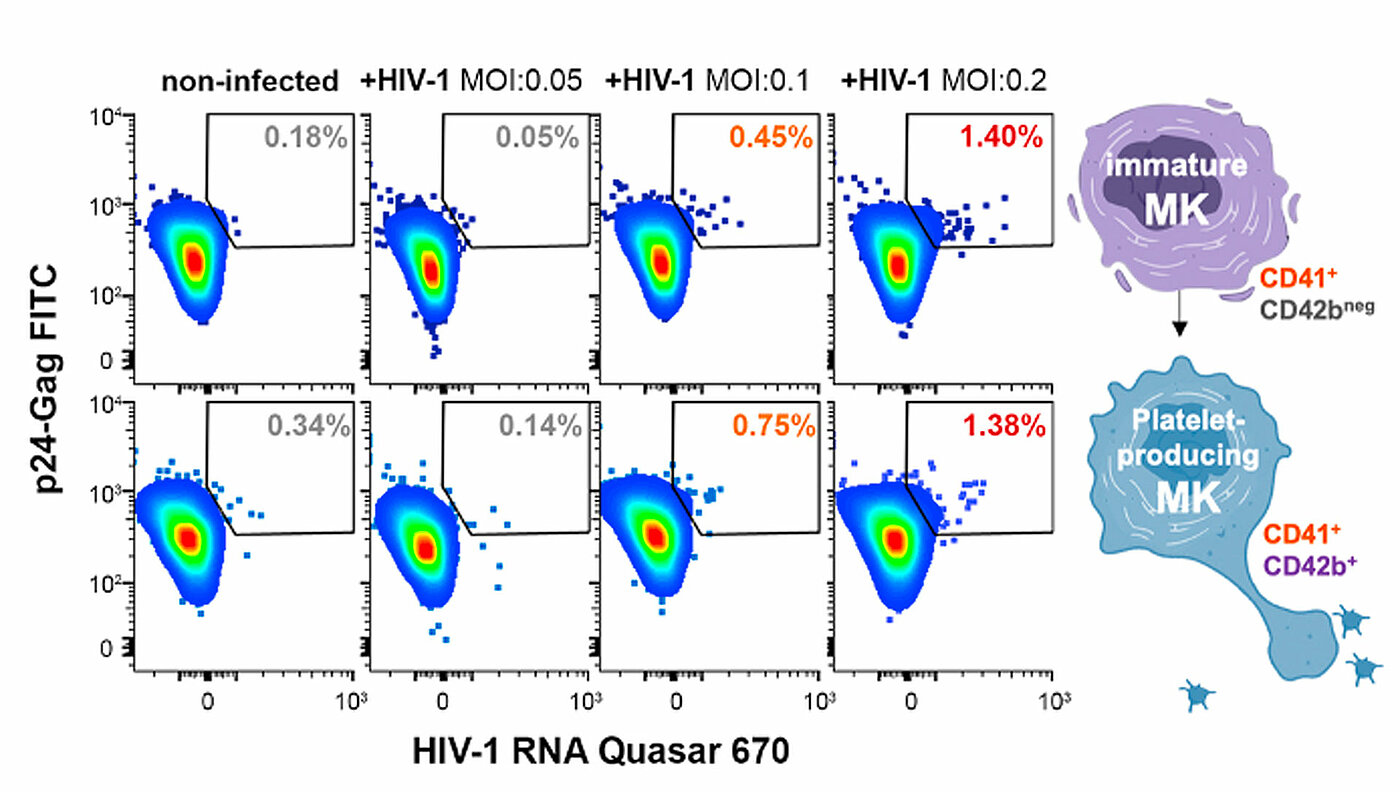
We hypothesize that this lack of immune recovery is linked to viral persistence within bone marrow megakaryocytes, as approximately 80% of immunological non-responders harbor HIV-infected MKs despite ongoing therapy. These findings suggest that the bone marrow can serve as a target tissue for HIV infection and may constitute a site of viral persistence.
However, it is unlikely that a long-term viral reservoir is established directly within megakaryocytes, given their relatively short lifespan. Instead, we propose that such a reservoir is maintained within hematopoietic stem and progenitor cells (HSPCs), from which megakaryocytes are derived. The infection would then be transmitted to mature cells through differentiation (Figure below). Furthermore, HSPCs express the receptors required for viral entry.
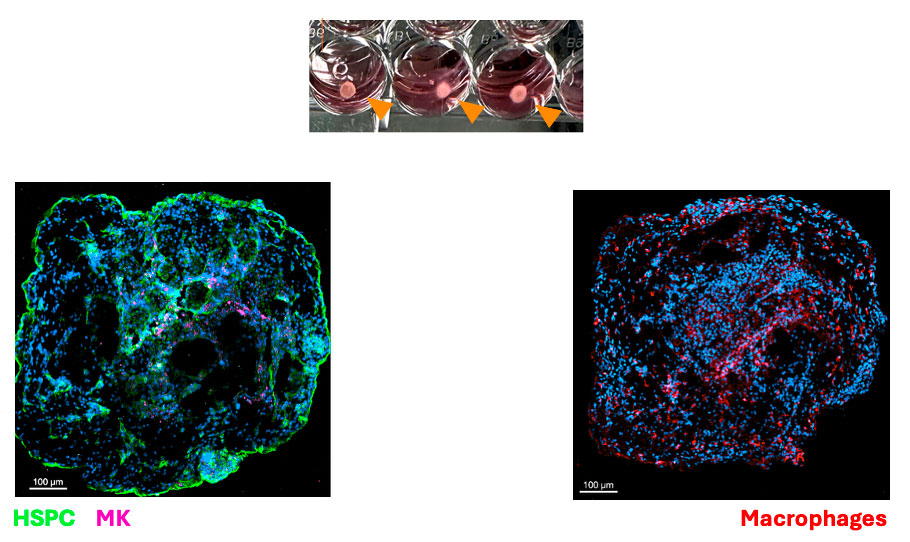
In this context, hiPSC-derived models enable us to generate immunocompetent bone marrow organoids, providing a powerful platform to identify the HSPC subpopulations targeted by HIV-1 and capable of sustaining chronic infection.
This model also allows us to assess the impact of infection on myelopoiesis, a process that may be disrupted by viral persistence and result in alterations in the frequency and distribution of specific cellular populations.
Through these studies, our objective is to improve our understanding of HIV-1 tissue reservoirs, which represent one of the major barriers to viral eradication. Ultimately, this work aims to support the development of novel therapeutic strategies targeting viral persistence and promoting a functional cure for HIV-1 infection.