
Reactive Astrocyte-Associated IL-33 Signaling Contributes to a Protective Neuroimmune State During Chronic Toxoplasma gondii–Plasmodium berghei Coinfection
Leleu, I., Keswani, T., Herbert, F., Picavet, C., Arnaud, M., Marion, S., Glineur, C., & Pied, S. (2027). Reactive Astrocyte-Associated IL-33 Signaling Contributes to a Protective Neuroimmune State During Chronic Toxoplasma gondii-Plasmodium berghei Coinfection. Glia, 75(1), e70257. doi.org/10.1002/glia.70257
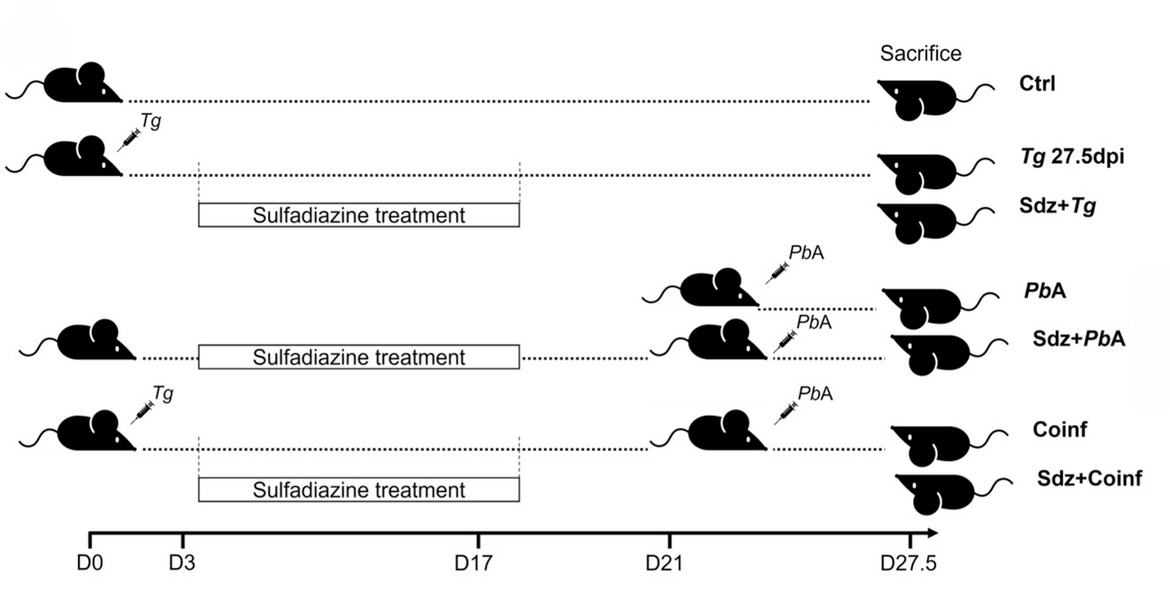
Cerebral malaria (CM) is a lethal neuroinflammatory syndrome characterized by blood–brain barrier disruption and excessive immune-mediated neuronal damage. Astrocytes are emerging as key regulators of CNS homeostasis, yet their contribution to disease tolerance during polymicrobial infections remains poorly understood. Here, we show that chronic Toxoplasma gondii (Tg) infection protects against experimental cerebral malaria (ECM) induced by Plasmodium berghei ANKA (PbA) by establishing a regulated neuroimmune environment rather than reducing cerebral parasite burden.