
CIIL - NEWSLETTER , June 2026 - N° 19
Engineer Profiles

It was during my first internships that I began building my career at the intersection of pharmaceutical technology, microbiology, and immunology. In 2007, I first worked on developing a colonic-release galenic formulation for inflammatory bowel diseases in Dr. Siepmann’s team. In 2008, I joined U995 led by Pr Simonet to study host–pathogen interactions. There I discovered the immune response during bacterial infections and carried out my first cell cultures, murine models, and analyses of the infection response.
In 2008, I joined the Institut Pasteur de Lille within the “NOD-like receptors in infection and immunity” team of U1019, dedicated to inflammatory bowel diseases and the links between the microbiota and the immune system. I was responsible for managing a breeding colony of multiple immunodeficient mouse strains and developed strong expertise in animal experimentation, biochemistry, and molecular biology (cytokine assays, NLR/TLR signaling pathways, gene expression analysis, lung and colonic histology). This immersion in innate immunity laid the foundation for my later work on respiratory infections.
In 2013, I joined the EA7366 research unit, “Translational research on the host–pathogen relationship in Pseudomonas aeruginosa,” at the University of Lille as a research and training engineer in the ANTI-PYO project. Alongside chemists and biologists, I contributed to the evaluation of multivalent glycoclusters developed for their anti-adhesion properties against P. aeruginosa, in connection with work published in the Journal of Medicinal Chemistry. The idea was to prevent the bacterium from attaching to the respiratory epithelium in order to propose a therapeutic strategy complementary to antibiotics, especially for patients with chronic lung diseases. I set up and used acute and chronic pulmonary infection models, both in vitro and in vivo, which strengthened my expertise in experimental infection, imaging, and compound screening.
At the same time, my interest in innate immunity led me to work on the type III secretion system of P. aeruginosa and its role in activating the NLRC4 inflammasome. Work published in International Immunology showed that the human NAIP–NLRC4 inflammasome specifically detects the T3SS “inner-rod” protein, triggering an inflammatory response that is decisive for the outcome of infection. These findings shed light on how host cells sense P. aeruginosa and inform my projects aimed at better modulating this response in the lung.
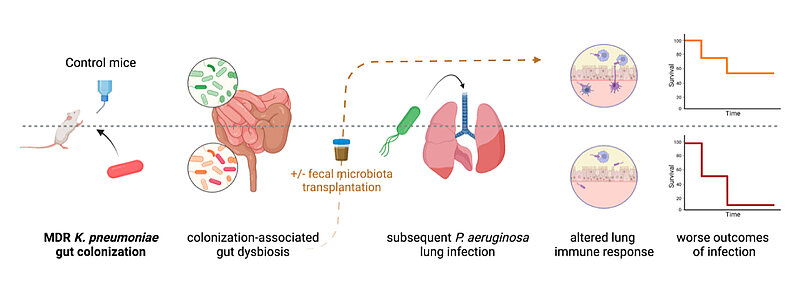
In 2020, I joined the Opinfield team, led by Dr Philippe Gosset, which focuses on opportunistic respiratory infections and chronic lung diseases. Part of my work addresses the gut–lung axis: we recently showed that intestinal colonization by a multidrug-resistant Klebsiella pneumoniae worsens P. aeruginosa pneumonia through a specific dysbiosis and an altered pulmonary immune response, as described in an article in Nature Communications. These results illustrate how the digestive reservoir of multidrug-resistant bacteria can influence the severity of respiratory infections in vulnerable patients. This work is now continuing within the TIILD team, led by Dr Muriel Pichavant.
Beyond experimental work, I also take on increasing responsibilities in laboratory management: planning needs for consumables, reagents, and animals; equipment monitoring; drafting regulatory documents; participating in funding applications; and supervising students and engineers. I strive to put my rigor, organizational skills, and experience at the service of the team, helping structure methodological approaches and support the development of new experimental models, with a central goal: to propose concrete therapeutic avenues to better protect the most vulnerable patients against Pseudomonas aeruginosa.