CIIL - NEWSLETTER , June 2026 - N° 19
Researcher Profiles
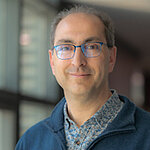
I completed my doctoral thesis at Inserm Unit 42, headed by Professor Daniel Camus, on Pneumocystosis, with Eduardo Dei-Cas as supervisor. My research program focused on the interaction between the fungus Pneumocystis sp. and alveolar epithelial cells, as well as on two additional aspects of pneumocystosis pathophysiology: host specificity of Pneumocystis sp. and the role of pulmonary surfactant in parasite development.
Following the defense of my PhD thesis in 1995, I left France to undertake a three-year postdoctoral fellowship at the GlaxoWellcome laboratories (Tres Cantos, Madrid, Spain; now GSK). I took this opportunity to build on the knowledge and skills acquired during my doctoral work on Pneumocystis in order to develop a more applied research focus, centered on the identification of novel therapeutic strategies against these opportunistic fungi. During this period, I also strengthened key competencies that I consider essential in research, including scientific rigor, work organization, and interdisciplinary collaboration, particularly with chemists, biochemists, and veterinarians. I retain excellent memories of this postdoctoral experience, as the working environment was exceptional and I was able to benefit from the rich cultural and culinary heritage of this remarkable country. Upon my return in 1998, I was appointed Associate Professor (Maître de Conférences) at the Faculty of Pharmacy, and later promoted to Professor in 2006, while continuing my research activities on pneumocystosis within the “ Biology and Diversity of Emerging Eukaryotic Pathogens” team, first led by Eduardo Dei-Cas and subsequently by Éric Viscogliosi.
In 2015, I shifted my research focus and joined the Jamal Khalife team to further develop my work on Plasmodium. The overall objective of my project is to characterize several Plasmodium falciparum-specific metallophosphatases at both the molecular and functional levels, with the aim of exploiting them as novel potential antimalarial targets. To achieve this, we used the 3D structure of the catalytic site of one of these proteins, PfPPM9, as a starting point for drug design. To date, our work on PfPPM9 has led to the synthesis of approximately one hundred compounds and the identification of 18 hit molecules, exhibiting IC₅₀ values ranging from 10 to 100 nM against P. falciparum in vitro, along with selectivity index between 70 and 750 in human HepG2 hepatocytes. The in vivo efficacy of one of our most promising hits was evaluated in a Plasmodium berghei model, demonstrating 100% efficacy at a dose of 30 mg/kg administered twice daily via intraperitoneal injection. Ongoing studies aim to develop prodrugs to extend the half-life of active compounds while maintaining optimal oral efficacy. This work is conducted in close collaboration with my chemistry colleagues Nicolas Lebègue (LilNCog, Lille Neuroscience & Cognition, UMR-S 1172F) and Amaury Farce (INFINITE, Institute for Translational Research in Inflammation, Lille, Inserm U1286). Finally, this project is supported by Inserm Transfert and SATT Nord (initial maturation funding).