CIIL - NEWSLETTER , June 2026 - N° 19
Engineer Profiles
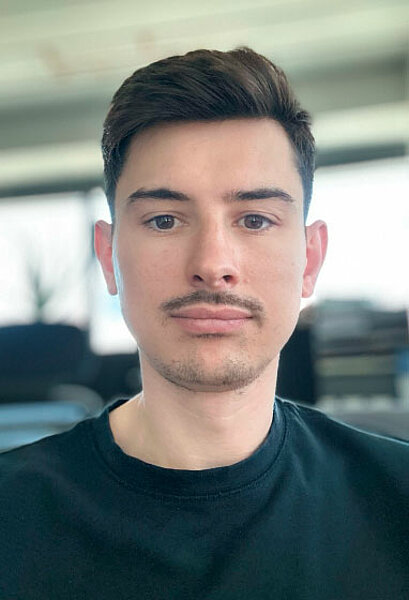
Trained as a chemist, I obtained my diplôme universitaire de technologie (DUT, a two-year technical French university degree) in Chemistry in 2015 from the University of Artois (Pas-de-Calais, France). During my final-year internship, I had the opportunity to participate in the Erasmus+ exchange program and to work in research and development within Dr. Bruce D. Alexander’s team (University of Greenwich, UK), focusing on the formulation and analysis of microgels for the encapsulation of active compounds.
Building on this experience, I pursued a professional bachelor’s degree in analytical chemistry. I completed this program through an apprenticeship (2016–2017) in the development division of the Centre for Research and Study on Fire Retardant Processes for Materials (CRÉPIM, Pas-de-Calais). My work involved formulating new flame-retardant materials from REACH-compliant raw materials and testing their fire resistance for applications in the railway sector.
After that, I joined the Institut Pasteur de Lille as a senior chemistry technician in the Chemistry and Biology of Flatworms team (CBF, CIIL), led by Dr. Oleg Melnyk. There, I developed expertise in peptide and protein chemistry, as well as in associated analytical techniques such as MALDI-TOF MS and coupled techniques like HPLC-MS. I contributed to several research projects, including the synthesis of new catalysts for SEA native chemical ligation (bis(2-sulfanylethyl)amino), the development of the oxoSEA (FastSEA) reaction, and the covalent modification of proteins through electrostatic assistance.
More recently (2021–2024), alongside my research activities, I completed a Master’s degree in Chemistry and Life Sciences, specializing in Analytical Sciences for Life (University of Lille), funded through my compte personnel de formation and supported by the Institut Pasteur de Lille. During my first-year Master’s internship, under the supervision of Dr. Vincent Dupres (Cellular Microbiology and Physics of Infection, CMPI, CIIL), I developed a method to study the denaturation of protein domains using AFM. During my second year, I developed a new method to monitor hydrazone ligation in 96-well plates based on fluorescence quenching, using the 4-aminobenzoyl/dinitrophenyl pair as fluorophore and quencher.
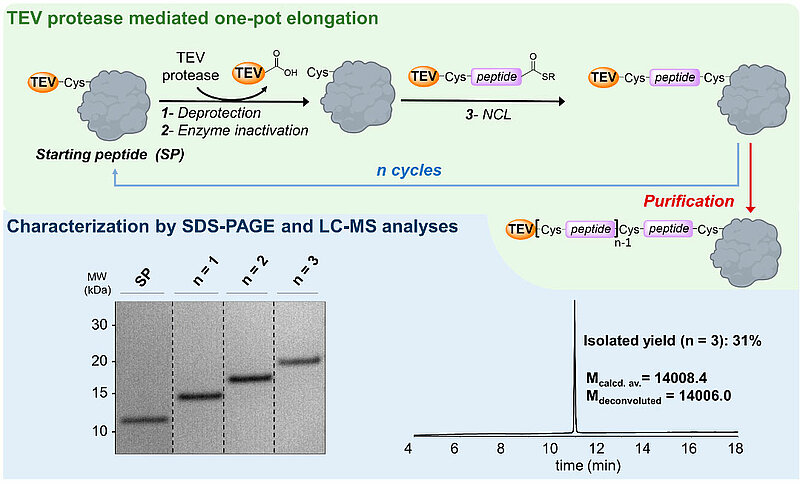
Since April 2025, I have been working as a research engineer in chemical synthesis at the Institut Pasteur de Lille. My work focuses on the development of chemoenzymatic processes for the production of polypeptides and proteins in aqueous media. In particular, I developed an iterative one-pot peptide elongation process. This approach exploits the TEV protease recognition motif (ENLYFQ/X), used as a protecting group for cysteinyl peptides. Following enzymatic cleavage of the tag and subsequent protease inactivation, the peptide chain is extended by native chemical ligation (NCL). This cycle can be repeated multiple times to obtain modified protein domains exceeding 10 kDa with high purity.
Next September, I will begin a PhD under the co-supervision of Dr. Oleg Melnyk and Dr. Vangelis Agouridas. My research will focus on the development of innovative methods for the synthesis and modification of peptides and proteins using transpeptidases. This project reflects my desire to deepen my understanding of the fundamental and mechanistic aspects of protein chemistry and biochemistry.
Outside of my professional activities, I am highly involved in sports, particularly running and indoor climbing. I also enjoy repairing various objects, including simple electronic and mechanical devices.